
This guide covers the top boarding schools in India across fee ranges, explaining not just what parents pay, but what those fees actually deliver.
What Parents Need to Know About Boarding School Costs
Boarding schools in India charge between ₹4 lakhs and ₹17 lakhs annually for 2026-27. Fees reflect infrastructure age, location economics, curriculum type, and student-teacher ratios more than educational quality alone.
Fee Ranges by Category:
Modern Infrastructure Schools (₹4-6 lakhs): Recently built facilities, air-conditioned boarding, technology integration, competitive student-teacher ratios
Established Regional Schools (₹8-10 lakhs): Proven track records, adequate facilities, balanced programs, cultural heritage
Heritage Institutions (₹10-15 lakhs): Established brands, extensive campuses, alumni networks, traditional prestige
International Curriculum Schools (₹15 lakhs and above): IB/IGCSE programs, global preparation, specialized teaching
First-year costs typically add ₹50,000 to ₹5,00,000 for admission fees and security deposits. Budget an additional ₹1-3 lakhs annually for uniforms, books, tours, and personal expenses.
Boarding School Fees at a Glance
For parents who need quick fee comparisons before diving deeper:
₹4-6 Lakhs Annually:
- HIM International School, Itanagar: ₹4.02-5.67L (CBSE, Co-ed)
- The Lawrence School, Sanawar: ₹7.76-8.79L (CBSE, Co-ed)
₹8-10 Lakhs Annually:
- Rishi Valley School, Chittoor: ₹8.75L (ICSE/ISC, Co-ed)
₹10-12 Lakhs Annually:
- Jain International Residential School, Bangalore: ₹10-12L (CBSE/IB, Co-ed)
- Welham Girls’ School, Dehradun: ₹10.10L (ICSE/Cambridge, Girls)
- Mayo College, Ajmer: ₹10.53L (CBSE/Cambridge, Boys)
- Bishop Cotton School, Shimla: ₹7.10-8.35L (ICSE/Cambridge, Boys)
₹13-17 Lakhs Annually:
- The Doon School, Dehradun: ₹13.62L (IB/ICSE, Boys)
- The Scindia School, Gwalior: ₹9.92L (CBSE, Boys)
- Woodstock School, Mussoorie: ₹15.90-17.65L (IB, Co-ed)
These are annual boarding fees. First-year costs may be significantly higher due to admission fees and deposits. Detailed school profiles follow below.
Did You Know?
Many boarding schools charging over ₹12 lakhs still operate with student-teacher ratios above 1:25. Parents often assume higher fees guarantee smaller classes. That assumption is frequently incorrect.
What Drives These Price Differences
Understanding cost drivers helps you evaluate whether pricing aligns with actual value delivered.
Infrastructure Economics:
Schools built in the past decade provide air-conditioned facilities, smart classrooms, and modern boarding at competitive costs. They avoid expensive retrofitting of heritage buildings and incorporate contemporary educational design from the ground up.
Older institutions face ongoing maintenance costs for aging buildings and systems. Adding air conditioning, technology infrastructure, and updated laboratories to existing structures requires substantial investment that appears in fees without proportional improvement in student experience.
Location and Operational Costs:
Metropolitan schools pay premium prices for land, utilities, and staff salaries. Regional schools often deliver equivalent quality at lower fees simply because local economics favor them.
This price difference does not always indicate quality differences. A well-run school in a tier-two city may offer superior facilities for less money than a comparable institution in Delhi or Bangalore purely because of location economics.
Student-Teacher Ratios Matter:
Schools maintaining 15 students per teacher spend significantly more on salaries than those with 25 students per teacher. This investment appears in annual fees but delivers measurably better individual attention and academic outcomes.
Lower ratios enable teachers to know each student’s learning style, identify struggles early, and provide targeted support. The difference between 1:15 and 1:25 ratios is not subtle in daily student experience.
Research Insight:
Studies consistently show that teacher attention and emotional safety impact long-term academic outcomes more than campus size or brand reputation.
Curriculum and Accreditation Costs:
CBSE affiliation provides national recognition at accessible costs. The curriculum prepares students well for Indian competitive exams and higher education.
International boards like IB and IGCSE require specialized teacher training, external examinations, and accreditation fees that increase costs substantially. These programs prepare students specifically for global universities but may not provide proportional value for families planning Indian higher education paths.
Representative Schools Across Price Points
The following schools represent different value propositions across India’s boarding education landscape. This is not a ranking by quality. Each serves different family priorities and budgets.
1. Modern Value Category: HIM International School

Location: Itanagar, Arunachal Pradesh
Board: CBSE
Annual Fees: ₹4.02-5.67 lakhs
Type: Co-educational
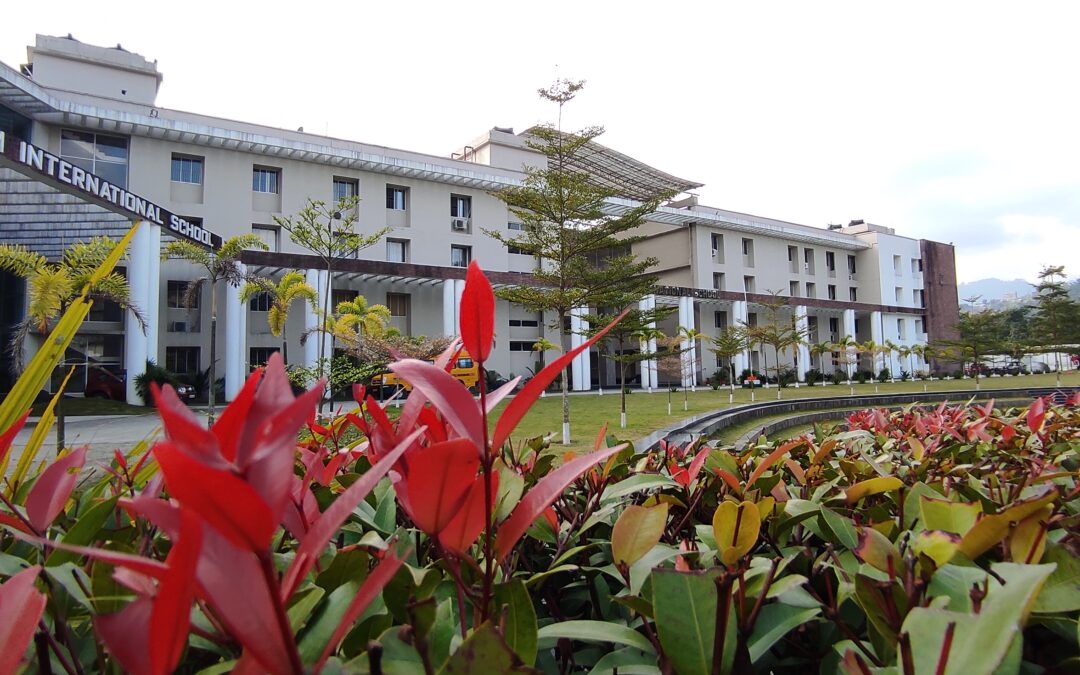
HIM International School operates on 23 acres with comprehensive facilities built in 2017. The school maintains a 1:14 student-teacher ratio and has earned recognition as Arunachal Pradesh’s top day-cum-boarding school for seven consecutive years.
Infrastructure includes air-conditioned smart classrooms, separate subject-specific laboratories, a library with 10,000 books, and air-conditioned boarding rooms. The school offers an all-weather swimming pool, 10-meter shooting range, and squash court alongside standard sports facilities.
Technology integration includes coding from primary grades and artificial intelligence concepts in higher classes. The Value Inculcation Programme emphasizes practical character development alongside academics.
Fee structure provides quarterly payment options. One-time admission fees range ₹20,000-30,000. Caution deposit of ₹10,000 is refundable.
2. Established Heritage: The Lawrence School, Sanawar

Location: Sanawar, Himachal Pradesh
Board: CBSE
Annual Fees: ₹7.76-8.79 lakhs
Type: Co-educational
Founded in 1847, The Lawrence School operates as one of the world’s oldest co-educational boarding institutions. The Kasauli Hills location provides peaceful surroundings focused on academics and character development.
The school follows traditional disciplinary approaches while incorporating modern teaching methods. Extensive playing fields support athletics, football, basketball, and hockey programs. Boarding follows dormitory systems with house-based organization.
The institution maintains established routines and values dating back over 170 years, appealing to families who value educational continuity and proven methods. First-year costs include one-time admission fee of ₹1 lakh and refundable caution money of ₹6 lakhs.
3. Progressive Education: Rishi Valley School

Location: Rishi Valley, Chittoor District, Andhra Pradesh
Board: ICSE/ISC
Annual Fees: ₹8.75 lakhs
Type: Co-educational
Founded in 1926 by philosopher J. Krishnamurti, Rishi Valley emphasizes holistic education that awakens intelligence and develops complete human beings. The school houses 360 boarding students from across India in a serene valley campus at 800 meters altitude.
Teaching prioritizes understanding over competitive pressure. The student-teacher ratio of 7:1 enables intensive individual attention and discussion-based learning. Students live in small houses of 12-22 students with resident house parents, creating an extended family atmosphere.
The approach rejects competitive education in favor of developing intellectual, aesthetic, moral, and emotional dimensions alongside academics. Students participate in environmental activities, rural education programs, and community service. The school values nature connection, philosophical inquiry, and freedom to question without religious or political conditioning.
Classes IV-VIII follow a flexible curriculum free from examination pressure. Classes IX-XII prepare for ICSE and ISC examinations while maintaining emphasis on wider awareness and holistic growth.
4. Modern Comprehensive: Jain International Residential School
Location: Bangalore, Karnataka
Board: CBSE/IB
Annual Fees: ₹10-12 lakhs
Type: Co-educational
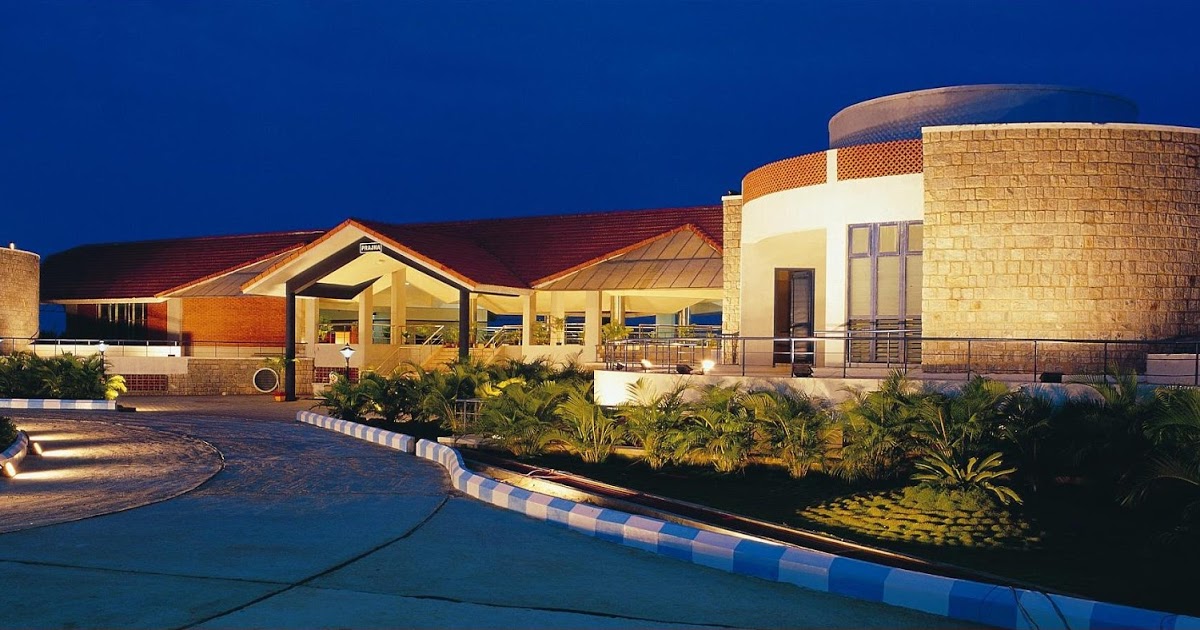
JIRS provides both CBSE and IB curriculum options on a contemporary campus. Facilities include modern laboratories, sports complexes, and performing arts centers built to current standards.
Value education rooted in Jain philosophy operates within inclusive, secular practice. Academic rigor balances with comprehensive co-curricular programs. The metropolitan location provides access to Bangalore’s cultural and educational resources.
Boarding accommodations offer comfortable modern facilities with adequate supervision and mentoring support.
5. Premier Girls Education: Welham Girls’ School

Location: Dehradun, Uttarakhand
Board: ICSE/Cambridge
Annual Fees: ₹10.10 lakhs
Type: All-girls
Welham Girls’ operates as a leading all-girls residential institution on 23 acres in Dehradun. ICSE curriculum combines with Cambridge programs for senior students pursuing international education paths.
Academic standards remain rigorous with strong board examination performance. Arts, music, and cultural programs receive substantial attention alongside academics. The single-gender environment focuses on women’s empowerment and leadership development.
Sports facilities include basketball, tennis, swimming, and athletics with professional coaching. Admission selectivity is high with assessment processes determining student selection. First-year costs include one-time admission fee of ₹1.50 lakhs and refundable security deposit of ₹5.05 lakhs.
6. Royal Heritage: Mayo College

Location: Ajmer, Rajasthan
Board: CBSE/Cambridge
Annual Fees: ₹10.53 lakhs
Type: All-boys
Founded in 1875 for princely families, Mayo College combines heritage architecture with modern educational facilities. The extensive campus preserves traditional Rajasthani design while housing contemporary laboratories and technology centers.
Both CBSE and Cambridge curricula are offered. Sports receive major emphasis with professional coaching in cricket, polo, football, and athletics. The school maintains polo grounds, a distinctive facility among contemporary boarding schools.
Alumni networks include prominent business leaders and professionals across fields. The all-boys environment follows traditional single-gender education models valued by some families. First-year costs include one-time admission fee of ₹2.50 lakhs and refundable caution money of ₹5.27 lakhs.
7. Traditional Excellence: Bishop Cotton School

Location: Shimla, Himachal Pradesh
Board: ICSE/Cambridge
Annual Fees: ₹7.10-8.35 lakhs
Type: All-boys
Asia’s oldest boys’ boarding school, Bishop Cotton maintains strong Anglo-Indian heritage dating to 1859. The hill station location provides cool climate and peaceful study environment year-round.
ICSE and Cambridge curricula follow traditional approaches emphasizing academics, sports, and character development. House systems organize students into competing groups for sports and academic activities.
Established routines and traditions appeal to families seeking continuity with historical educational models. Supervision maintains discipline while allowing age-appropriate student independence. First-year costs include one-time admission fee of ₹65,000 and refundable caution money of ₹3 lakhs.
8. Premium Boys Education: The Doon School

Location: Dehradun, Uttarakhand
Board: IB/ICSE
Annual Fees: ₹13.62 lakhs
Type: All-boys
India’s most prestigious all-boys boarding institution operates on 72 acres in Dehradun. Founded in 1935, the school follows British public school models integrated with Indian cultural values.
Curriculum options include IB Diploma and ICSE with rigorous academic expectations. Leadership development, critical thinking, and social awareness receive emphasis alongside traditional academics. Facilities span extensive sports fields, performing arts centers, and modern academic buildings.
First-year costs reach approximately ₹26 lakhs including admission fees and security deposits. Admission remains highly competitive, limited to Class VII and VIII entry. Alumni network includes prominent leaders across government, business, and civil society.
9. Historic Fort Campus: The Scindia School

Location: Gwalior, Madhya Pradesh
Board: CBSE
Annual Fees: ₹9.92 lakhs
Type: All-boys
The Scindia School occupies Gwalior Fort with campus spread across the historic complex. The distinctive setting provides unique architecture though heritage restrictions sometimes limit infrastructure updates.
CBSE curriculum emphasizes academics and sports. Recent additions include VR-enabled classrooms integrating technology with traditional methods. Professional coaching supports cricket, football, hockey, and athletics programs.
The fort location creates memorable boarding experiences. Infrastructure maintenance presents ongoing challenges given building ages and heritage preservation requirements. First-year costs include one-time admission fee of ₹2.50 lakhs and refundable caution money of ₹3.50 lakhs.
10. International Focus: Woodstock School

Location: Mussoorie, Uttarakhand
Board: IB
Annual Fees: ₹15.90-17.65 lakhs
Type: Co-educational
Asia’s oldest international boarding school offers IB curriculum with highly diverse international student population. Mountain campus location provides distinctive setting with year-round cool climate.
Student-teacher ratio of 6:1 enables intensive academic support. IB Diploma program prepares students specifically for international universities and global careers following international rather than Indian educational models.
First-year costs include one-time establishment fee of ₹4 lakhs (non-refundable) and security deposit of ₹3.50 lakhs (refundable). The school serves families prioritizing international education pathways and multicultural exposure. Substantial financial aid available for deserving students.
Editorial Note: This overview represents different educational philosophies and price points rather than quality rankings. Each school serves specific family priorities. The right choice depends on your child’s needs, your family values, and long-term educational goals.
What Fees Actually Cover
Annual charges typically include tuition, boarding accommodation, meals, basic sports access, library usage, and supervision. Specifics vary by institution.
Standard Inclusions:
Classroom instruction with teacher salaries and basic materials. Quality depends heavily on student-teacher ratios maintained.
Furnished boarding rooms, typically housing two to four students. Air conditioning remains uncommon except in recently built facilities.
Three to four meals daily with vegetarian and non-vegetarian options. Food quality directly affects student health and academic performance.
Access to playgrounds, courts, and standard equipment. Professional coaching in specialized sports usually costs extra.
Warden supervision and campus security. Effective schools maintain one warden per 15-25 students.
Common Additional Expenses:
Uniforms and sports clothing: ₹20,000-50,000 initially, with ongoing replacement. These costs feel small individually but often surprise parents because they are paid upfront, not spread across the year.
Textbooks and stationery: ₹15,000-30,000 annually
Personal items and toiletries: ₹10,000-20,000 yearly
Educational tours: ₹20,000-50,000 depending on destination
Transport for home visits: Variable by distance
Medical expenses beyond basic first aid: As needed
Plan for ₹1-3 lakhs beyond annual fees for realistic total costs.
Remember This:
You will pay boarding fees for at least five to seven years. A ₹3 lakh annual difference becomes a ₹15-20 lakh decision over time.
Evaluating Value for Your Family
Consider These Factors:
Does infrastructure age matter for your priorities? Modern buildings offer better climate control and technology integration. Heritage campuses provide distinctive character and traditions.
What student-teacher ratio does the school actually maintain in classrooms? This affects daily experience more than most other factors. Verify claimed ratios during campus visits.
Are you paying for facilities or brand recognition? Some premium fees buy superior infrastructure. Others primarily purchase alumni networks and social prestige. Both have value. Neither is wrong. The mistake is paying for one while expecting the benefits of the other.
How do location economics affect pricing? A ₹6 lakh school in a regional city may offer better facilities than a ₹10 lakh school in a metro simply because of real estate and operational cost differences.
Questions Worth Asking:
- What does your annual fee specifically include and exclude?
- What additional costs should we budget for realistically?
- How old are your main buildings and infrastructure systems?
- What is your actual classroom student-teacher ratio by grade level?
- What is your teacher retention rate over the past five years?
- How do you support students struggling academically or emotionally?
- What are your medical emergency protocols?
Making This Decision Well
Visit schools during regular sessions when you can observe actual operations. Watch teacher-student interactions. Check facility maintenance. Gauge student wellbeing and happiness.
Request specific data on student-teacher ratios, exam results, university placements, and complete fee structures. Transparent answers indicate institutional confidence.
Consider your child’s personality. Some children thrive with early independence and structure. Others need gradual transitions and closer family contact.
Evaluate long-term affordability honestly. Choose fee structures your family can sustain comfortably without financial stress affecting either parents or students.
Match educational philosophy to your values. Schools emphasizing balanced development differ fundamentally from those prioritizing competitive academic pressure. Both produce successful graduates. Choose what aligns with how you want your child to grow.
A Note on Value and Cost
The most expensive school is not necessarily the best school for your child. The best school matches your child’s specific needs, learning style, and developmental stage while aligning with your family’s values and financial capacity.
Schools charging ₹4-6 lakhs with modern infrastructure and strong student-teacher ratios often produce outcomes matching institutions at ₹12-15 lakhs. Price differences frequently reflect location economics and brand value rather than proportional educational quality.
Heritage institutions charging premium fees offer genuine intangible benefits through alumni networks and established reputations. These matter significantly for some families and career paths. They matter little for others. Assess honestly what you value.
Research thoroughly. Visit thoughtfully. Ask direct questions. Trust your observations more than marketing materials. Choose based on genuine fit rather than prestige alone.
Your child’s boarding years shape how they approach learning, relationships, and challenges throughout life. Feeling uncertain about this decision is normal. Every thoughtful parent weighs these choices carefully. What matters most is not finding the perfect school, but finding the right school for your unique child and family situation. That decision, made with care and honesty, will serve them well.
Recent Comments