Boarding Schools in North East India: A Parent’s Guide to Making the Right Choice

Key Takeaways:

  • Boarding education in Northeast India has evolved significantly, offering facilities that rival metropolitan institutions
  • Parents increasingly choose regional boarding schools for cultural continuity alongside academic excellence
  • The decision involves evaluating safety, academic frameworks, infrastructure, and developmental philosophy
  • Fee structures vary from ₹1.5 lakhs to ₹6 lakhs annually based on grade level and facilities
  • Personal campus visits and conversations with current families reveal more than promotional materials

Understanding the Appeal of Regional Boarding Education

Parents across Arunachal Pradesh, Assam, Meghalaya, and neighboring states face a common dilemma when children reach middle school. The choice often appears binary: send your child to a distant metropolitan boarding school or continue with local day schools that may not offer the depth of facilities you want.

A third option has emerged over the past decade. Boarding schools in Northeast India now provide infrastructure, academic rigor, and holistic development programs that were once available only in metros like Dehradun, Bangalore, or Ooty.

This shift matters for families who value both quality education and cultural rootedness. Your child can access English-medium CBSE education, prepare for national competitive exams, and develop independence while remaining connected to regional culture, festivals, and family.

Did You Know? Boarding schools have been serving Northeast India for decades. St. John’s School Whitehall in Shillong, founded in 1974, began with just 31 students, 29 of whom were boarders, in a rented bungalow. The region has seen significant growth in quality boarding education since then, with modern CBSE-affiliated institutions now offering world-class facilities comparable to schools anywhere in India.

What Parents Actually Evaluate When Choosing Boarding Schools

The Safety Question Comes First

Every parent asks the same question first: will my child be safe? This concern extends beyond physical security to emotional wellbeing, health care, and supervision quality.

Boarding schools in the Northeast benefit from peaceful community environments. The region experiences lower crime rates compared to major cities. Smaller student populations enable closer supervision and quicker responses when children need help.

Effective safety measures include multiple layers. Look for schools that maintain adequate warden-to-student ratios. One warden supervising 20 students can provide genuine attention and build mentoring relationships. Ratios beyond 1:30 often indicate overstretched staff who manage crises but cannot prevent them.

Medical facilities deserve careful examination. A dispensary with basic medicines differs significantly from 24-hour nursing care with protocols for emergencies. Ask schools how they handle medical situations, what their evacuation procedures involve, and how quickly they notify parents.

Important to Remember: CCTV cameras and boundary walls provide baseline security, but the quality of human supervision determines how safe children actually feel. Visit during regular school hours to observe how staff interact with students.

Academic Frameworks That Prepare Students for Multiple Pathways

The CBSE curriculum dominates quality boarding schools across Northeast India. This national board offers several advantages for families. Students can transfer between CBSE schools without curriculum disruption. The board exam structure prepares students for competitive exams like JEE and NEET. Universities across India recognize CBSE credentials without question.

Beyond board affiliation, examine how schools implement their curriculum. Small class sizes allow teachers to identify when individual students struggle with concepts. A 1:15 student-teacher ratio enables personalized attention that large classes cannot provide.

Modern pedagogy extends beyond textbooks and lectures. Interactive smart boards make abstract concepts visual. Well-equipped laboratories allow students to conduct experiments rather than just read about them. Digital libraries supplement physical books with resources students can access during study hours.

Technology integration has become standard rather than exceptional. Schools now introduce coding from primary grades and build computational thinking progressively. Artificial intelligence concepts appear in middle and senior school curricula, preparing students for universities and careers where these skills matter.

Infrastructure That Supports Learning and Development

Physical infrastructure reveals institutional priorities. Schools that invest in comprehensive facilities demonstrate commitment to holistic development rather than just academic results.

Air-conditioned classrooms matter in Northeast India’s varied climate. Comfortable learning environments help students focus during long school days. Smart boards in every classroom indicate technology integration across all subjects, not just computer science.

Laboratory facilities deserve close attention. Separate, well-equipped labs for physics, chemistry, biology, mathematics, social science, and languages indicate serious commitment to experiential learning. Generic science labs that serve multiple subjects limit the depth of practical work students can undertake.

Libraries reveal educational philosophy. A collection of 10,000 books with periodicals, reference materials, and digital resources suggests the school values reading and research. Small libraries with outdated collections indicate different priorities.

The Role of Sports and Physical Education

Sports programs in boarding schools serve multiple purposes beyond physical fitness. Team sports teach collaboration, leadership, and handling both victory and defeat. Individual sports build discipline, goal-setting, and self-motivation.

Schools that operate as partial sports academies provide professional coaching across multiple disciplines. Football, basketball, volleyball, cricket, badminton, table tennis, lawn tennis, and swimming become part of regular schedules rather than occasional activities.

Research Shows: Studies consistently demonstrate positive associations between regular sports participation and academic achievement. Physical activity improves concentration, reduces stress, and builds discipline. Students engaged in sports develop better time management skills as they balance athletic training with academic demands.

Specialized facilities like swimming pools, shooting ranges, or squash courts indicate institutional investment in sports excellence. These facilities remain rare in Northeast boarding schools, making them distinguishing features when they exist.

Boarding Life: Beyond Classrooms and Playing Fields

The quality of boarding facilities directly impacts student wellbeing and academic performance. Hostel rooms that accommodate 2-4 students strike a balance between privacy and social development. Dormitories with 8-10 students may reduce costs but increase noise and conflict.

Air-conditioning in hostels reflects attention to student comfort. Northeast India experiences hot summers and cold winters. Temperature-controlled living spaces help students sleep better and recover from demanding school days.

Meal quality and variety matter more than parents sometimes realize. Growing children need nutritious food four times daily. Schools that offer both vegetarian and non-vegetarian options respect dietary diversity. Kitchens that accommodate religious or medical dietary restrictions demonstrate operational sophistication.

Warden quality determines boarding experience more than facilities. Wardens who act as mentors help students navigate homesickness, peer conflicts, and academic pressures. A 1:20 warden-student ratio allows these relationships to develop. Higher ratios limit wardens to disciplinary roles rather than developmental ones.

A Case Study: How Strong Boarding Education Works in Practice

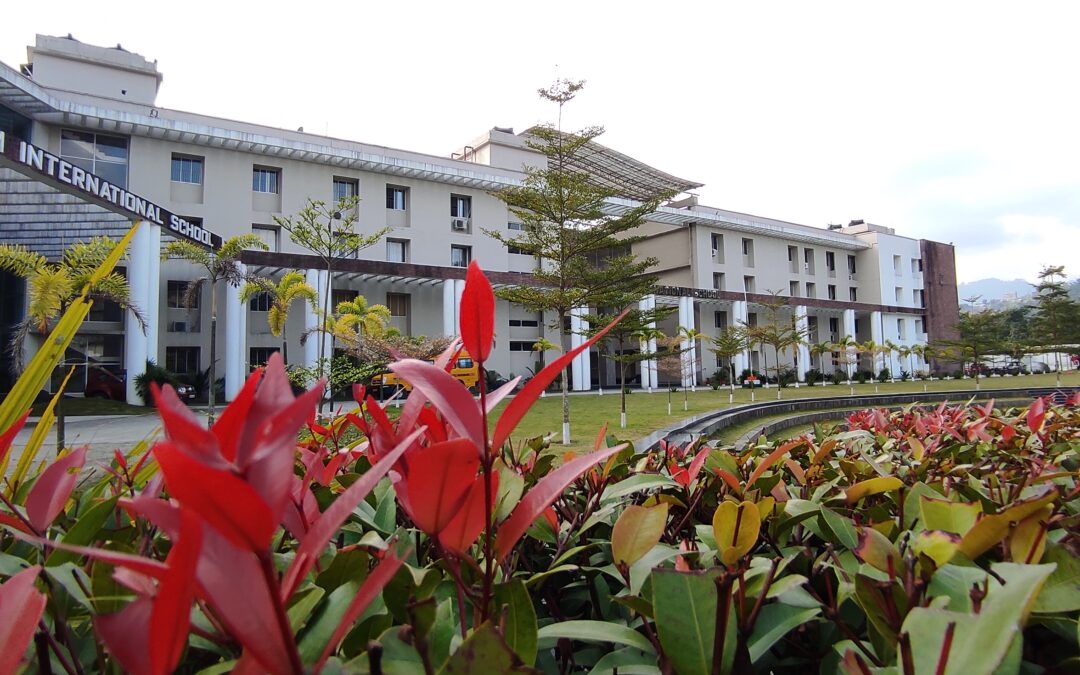
HIM International School in Itanagar demonstrates what comprehensive boarding education looks like when implemented thoughtfully. The institution operates on 24 acres, providing space for academic buildings, sports facilities, and residential areas without crowding.

The school maintains a 1:14 student-teacher ratio across grade levels. This allows teachers to know individual students well enough to identify learning gaps early and adjust their teaching approaches. Class sizes remain small even as enrollment grows, indicating commitment to personalized education rather than revenue maximization.

Infrastructure includes air-conditioned smart classrooms, separate subject-specific laboratories, and a library housing over 10,000 resources. These facilities support the school’s emphasis on experiential learning and technology integration.

The sports program operates at semi-professional levels. Students receive coaching in ten different sports from specialized instructors. An all-weather swimming pool, 10-meter air rifle and pistol shooting range, and squash court provide training opportunities uncommon in the region.

Boarding facilities feature air-conditioned rooms, 24-hour medical care from trained nursing staff, and nutritious meals four times daily. The 1:20 warden-student ratio ensures adequate supervision and mentoring capacity.

The school has maintained recognition as Arunachal Pradesh’s top day-cum-boarding school for seven consecutive years (2018-2024) according to Education World India School Rankings. This consistency suggests stable leadership and sustained quality rather than temporary achievement.

What Many Parents Overlook: Rankings provide useful signals but tell incomplete stories. Visit schools yourself to observe teacher-student interactions, check facility maintenance, and gauge the overall atmosphere. Numbers on websites differ from lived experiences.

Understanding Fee Structures and Financial Planning

Boarding school fees in Northeast India vary based on grade level, facilities provided, and institutional positioning. Annual costs range from approximately ₹1.5 lakhs to ₹6 lakhs for most schools.

These fees typically cover tuition, boarding, meals, and basic activities. Additional expenses include uniforms, textbooks, specialized sports training, and optional programs like foreign educational tours.

Fee transparency matters significantly. Schools should clearly itemize what their annual fees include and exclude. Hidden costs that appear mid-year create financial stress and erode trust.

Many institutions offer sibling discounts, typically 25% on tuition fees for younger siblings. Merit-based scholarships ranging from 25% to 100% of tuition fees reward academic excellence and make quality education accessible to deserving students regardless of financial capacity.

Compare boarding fees with day scholar options when available. At HIM International School, for example, boarding fees range from ₹4,02,200 to ₹5,67,350 annually while day scholar fees range from ₹1,36,700 to ₹2,48,650. The difference reflects boarding infrastructure, meals, supervision, and extended learning support.

Suggested Read: Top Boarding School Fees in India: Real Cost vs Value for Parents

Value Education and Character Development

Academic excellence alone does not prepare children for meaningful adult lives. Character formation, ethical reasoning, and value internalization matter equally.

Progressive boarding schools implement structured value education programs. These programs move beyond abstract lectures to practical application through real situations, discussions, and consistent modeling by staff.

Core values typically include humility, respect, integrity, empathy, confidence, teamwork, perseverance, accountability, and innovation. Students learn these through house systems, leadership opportunities, community service, and how adults respond to their mistakes.

Gavel Clubs, debate societies, and student councils provide platforms for developing public speaking, leadership, and democratic decision-making. Annual educational tours expose students to different cultures and environments, building adaptability and broadening perspectives.

Career counseling that begins in Class VIII helps students make informed decisions about subject selection and future pathways. Good counseling explores both conventional careers and emerging fields without pushing students toward predetermined choices.

Common Parent Mistakes When Evaluating Schools

Relying Solely on Rankings and Brochures

Rankings provide useful data points but capture limited dimensions of school quality. A school might rank highly based on infrastructure while struggling with teacher retention or student wellbeing. Glossy brochures showcase facilities but reveal nothing about daily student experiences.

Visit campuses personally. Observe classes in session. Watch how teachers interact with students during breaks. Speak with current parents about their actual experiences rather than marketing promises.

Focusing Only on Academic Results

Board exam scores matter, but schools can achieve high results through excessive pressure that harms student wellbeing. Examine whether schools balance academics with sports, arts, and free time. Children who burn out in Class X perform poorly in competitive exams and struggle in university.

Overlooking Communication Systems

Strong parent-school communication systems enable collaborative problem-solving. Schools should provide regular academic updates, respond promptly to concerns, and facilitate parent-teacher meetings that go beyond cursory conversations.

Online portals that share attendance, grades, and behavioral observations help parents stay informed without becoming intrusive. Emergency communication protocols matter for peace of mind.

Choosing Based on Proximity Alone

Geographic convenience tempts parents to choose nearby schools even when they do not fully meet their child’s needs. An extra two hours of travel may be worthwhile if the school significantly better matches your educational priorities and your child’s learning style.

Preparing Your Child for the Boarding Transition

The transition to boarding school requires preparation that begins months before the first day. Children handle change better when they understand what to expect and feel some control over the process.

Start conversations early about what boarding means. Discuss exciting aspects like making friends from different backgrounds and challenging aspects like missing family dinners. Acknowledge that homesickness is normal and temporary.

Involve children in school selection decisions. When children visit campuses, ask questions, and participate in choosing their school, they feel ownership rather than being sent away. This psychological difference significantly affects adjustment.

Practice independence at home gradually. Encourage children to manage study schedules, organize belongings, wake themselves up, and solve minor problems before seeking adult help. These skills make boarding life less overwhelming.

Discuss communication expectations clearly. How often will you call? What topics should your child bring to you versus resolving with school staff? Clear expectations prevent both excessive dependence and unnecessary isolation.

The Admission Process: What to Expect

Most boarding schools in Northeast India admit students from LKG through Class XI, with Class XII admissions rare due to board exam preparation requirements.

The process typically involves submitting an application with academic records, birth certificate, transfer certificate, Aadhar cards, and photographs. Boarding applicants need additional medical certificates and fitness reports.

Schools conduct admission assessments appropriate to the grade level. These may test academic readiness, learning potential, and basic behavioral compatibility with the school environment. Many schools also conduct parent-child interviews to assess family-school alignment.

After selection, fee payment confirms admission. Most schools accept online transfers, demand drafts, and cheques while avoiding cash payments for transparency and record-keeping.

Applications typically open between November and March for the following academic year. Popular schools fill quickly, so early application provides more options and less pressure.

Questions Every Parent Should Ask During School Visits

About Academic Programs:

  • What is your actual student-teacher ratio in classrooms?
  • How do you identify and support students who struggle with specific subjects?
  • What technology tools do teachers use regularly in teaching?
  • How do you prepare students for competitive exams beyond the board curriculum?

About Boarding Life:

  • What is your warden-to-student ratio in hostels?
  • How do you handle homesickness and emotional difficulties?
  • What are your protocols for medical emergencies?
  • How often can parents visit, and what are the communication policies?

About Holistic Development:

  • What sports receive professional coaching rather than basic physical education?
  • What arts, music, and cultural programs do you offer?
  • How do you develop leadership skills beyond academic excellence?
  • What career counseling and guidance do you provide?

About Practical Matters:

  • What exactly does your fee structure include and exclude?
  • What additional costs should parents budget for annually?
  • How do you handle disciplinary issues and conflicts?
  • What is your teacher retention rate over the past five years?

Making the Final Decision

Choosing a boarding school represents a significant family decision that affects your child’s academic trajectory, social development, and emotional wellbeing. The right choice balances multiple factors rather than maximizing any single dimension.

Consider your child’s personality and learning style. Some children thrive with structure and independence from early ages. Others need more gradual transitions and benefit from starting boarding in Classes VI-VIII rather than earlier.

Evaluate school philosophy against your family values. If you prioritize academic pressure and competitive results, choose schools with that orientation. If you value balanced development and childhood joy, seek schools that embody those principles.

Financial sustainability matters for peace of mind. Choose fee structures your family can sustain for multiple years without stress. Scholarship dependence creates anxiety if renewal criteria are uncertain.

Trust your instincts from campus visits. Schools where you feel welcomed, where staff answer questions directly, and where current students seem genuinely happy deserve serious consideration. Schools that feel guarded or where students seem stressed warrant caution.

Looking Ahead: What Boarding Education Offers Long-Term

Boarding school graduates consistently report that the experience built capabilities they use throughout life. Independence, time management, conflict resolution, and adaptability become internalized rather than theoretically understood.

The diversity of boarding populations exposes students to peers from different states, economic backgrounds, and cultural practices. This early exposure builds empathy and communication skills that serve them in universities and workplaces.

Academic preparation at quality boarding schools positions students well for competitive exams and higher education. The structured study environment, peer learning culture, and readily available teacher support create conditions where students can achieve their potential.

The friendships formed in boarding schools often last for decades. Living together through formative years creates bonds that differ from day school friendships. These networks provide personal support and professional opportunities long after graduation.

Getting Started: Your Next Steps

If boarding education interests you, begin with research and campus visits. Contact schools directly to schedule tours during regular school hours when you can observe actual operations rather than staged presentations.

Request virtual tours if distance makes physical visits difficult initially, but plan in-person visits for your final two or three choices. The atmosphere, cleanliness, staff warmth, and student demeanor reveal more than virtual walkthroughs.

Speak with current parents whose children are in grades similar to where your child would enter. Ask about their actual experiences with academics, boarding life, communication, and problem resolution. These conversations provide perspectives that schools cannot offer.

Start these explorations at least a year before you plan to enroll your child. This timeline allows thorough evaluation without pressure and gives your child time to prepare emotionally for the transition.

For families considering boarding education in Arunachal Pradesh specifically, HIM International School welcomes campus visits throughout the year. The admission team arranges comprehensive tours, classroom observations, and conversations with current students and parents.

Contact details: 8132886528 or info@himinternationalschool.org. Campus address: Jollang (III) Daath Village, Itanagar, Arunachal Pradesh 791113.

Final Thoughts

Boarding schools in Northeast India offer families genuine alternatives to both local day schools and distant metropolitan institutions. The region’s educational infrastructure has matured significantly, providing access to facilities, faculty, and programs that support comprehensive student development.

The decision to choose boarding education is personal and complex. It involves evaluating institutional quality, assessing your child’s readiness, considering family values, and planning financial sustainability. No single school suits every child, and the most expensive or famous option is not necessarily the right one for your family.

What matters most is alignment between your child’s needs, your family’s values, and the school’s actual practices rather than its marketing promises. This alignment creates conditions where children can thrive academically, develop character, build lasting friendships, and prepare for meaningful adult lives.

Take time with this decision. Visit schools, ask difficult questions, trust your observations, and involve your child in the process. The right boarding school becomes a partner in your child’s development rather than a service you purchase. That partnership, built on shared values and mutual trust, makes all the difference in the educational journey ahead.
Top Boarding School Fees in India: Real Cost vs Value for Parents

Top Boarding School Fees in India: Real Cost vs Value for Parents

This guide covers the top boarding schools in India across fee ranges, explaining not just what parents pay, but what those fees actually deliver.

What Parents Need to Know About Boarding School Costs

Boarding schools in India charge between ₹4 lakhs and ₹17 lakhs annually for 2026-27. Fees reflect infrastructure age, location economics, curriculum type, and student-teacher ratios more than educational quality alone.

Fee Ranges by Category:

Modern Infrastructure Schools (₹4-6 lakhs): Recently built facilities, air-conditioned boarding, technology integration, competitive student-teacher ratios

Established Regional Schools (₹8-10 lakhs): Proven track records, adequate facilities, balanced programs, cultural heritage

Heritage Institutions (₹10-15 lakhs): Established brands, extensive campuses, alumni networks, traditional prestige

International Curriculum Schools (₹15 lakhs and above): IB/IGCSE programs, global preparation, specialized teaching

First-year costs typically add ₹50,000 to ₹5,00,000 for admission fees and security deposits. Budget an additional ₹1-3 lakhs annually for uniforms, books, tours, and personal expenses.

Boarding School Fees at a Glance

For parents who need quick fee comparisons before diving deeper:

₹4-6 Lakhs Annually:

  • HIM International School, Itanagar: ₹4.02-5.67L (CBSE, Co-ed)
  • The Lawrence School, Sanawar: ₹7.76-8.79L (CBSE, Co-ed)

₹8-10 Lakhs Annually:

  • Rishi Valley School, Chittoor: ₹8.75L (ICSE/ISC, Co-ed)

₹10-12 Lakhs Annually:

  • Jain International Residential School, Bangalore: ₹10-12L (CBSE/IB, Co-ed)
  • Welham Girls’ School, Dehradun: ₹10.10L (ICSE/Cambridge, Girls)
  • Mayo College, Ajmer: ₹10.53L (CBSE/Cambridge, Boys)
  • Bishop Cotton School, Shimla: ₹7.10-8.35L (ICSE/Cambridge, Boys)

₹13-17 Lakhs Annually:

  • The Doon School, Dehradun: ₹13.62L (IB/ICSE, Boys)
  • The Scindia School, Gwalior: ₹9.92L (CBSE, Boys)
  • Woodstock School, Mussoorie: ₹15.90-17.65L (IB, Co-ed)

These are annual boarding fees. First-year costs may be significantly higher due to admission fees and deposits. Detailed school profiles follow below.

Did You Know?
Many boarding schools charging over ₹12 lakhs still operate with student-teacher ratios above 1:25. Parents often assume higher fees guarantee smaller classes. That assumption is frequently incorrect.

What Drives These Price Differences

Understanding cost drivers helps you evaluate whether pricing aligns with actual value delivered.

Infrastructure Economics:

Schools built in the past decade provide air-conditioned facilities, smart classrooms, and modern boarding at competitive costs. They avoid expensive retrofitting of heritage buildings and incorporate contemporary educational design from the ground up.

Older institutions face ongoing maintenance costs for aging buildings and systems. Adding air conditioning, technology infrastructure, and updated laboratories to existing structures requires substantial investment that appears in fees without proportional improvement in student experience.

Location and Operational Costs:

Metropolitan schools pay premium prices for land, utilities, and staff salaries. Regional schools often deliver equivalent quality at lower fees simply because local economics favor them.

This price difference does not always indicate quality differences. A well-run school in a tier-two city may offer superior facilities for less money than a comparable institution in Delhi or Bangalore purely because of location economics.

Student-Teacher Ratios Matter:

Schools maintaining 15 students per teacher spend significantly more on salaries than those with 25 students per teacher. This investment appears in annual fees but delivers measurably better individual attention and academic outcomes.

Lower ratios enable teachers to know each student’s learning style, identify struggles early, and provide targeted support. The difference between 1:15 and 1:25 ratios is not subtle in daily student experience.

Research Insight:
Studies consistently show that teacher attention and emotional safety impact long-term academic outcomes more than campus size or brand reputation.

Curriculum and Accreditation Costs:

CBSE affiliation provides national recognition at accessible costs. The curriculum prepares students well for Indian competitive exams and higher education.

International boards like IB and IGCSE require specialized teacher training, external examinations, and accreditation fees that increase costs substantially. These programs prepare students specifically for global universities but may not provide proportional value for families planning Indian higher education paths.

Representative Schools Across Price Points

The following schools represent different value propositions across India’s boarding education landscape. This is not a ranking by quality. Each serves different family priorities and budgets.

1. Modern Value Category: HIM International School

Photo

Location: Itanagar, Arunachal Pradesh
Board: CBSE
Annual Fees: ₹4.02-5.67 lakhs
Type: Co-educational

HIM International School operates on 23 acres with comprehensive facilities built in 2017. The school maintains a 1:14 student-teacher ratio and has earned recognition as Arunachal Pradesh’s top day-cum-boarding school for seven consecutive years.

Infrastructure includes air-conditioned smart classrooms, separate subject-specific laboratories, a library with 10,000 books, and air-conditioned boarding rooms. The school offers an all-weather swimming pool, 10-meter shooting range, and squash court alongside standard sports facilities.

Technology integration includes coding from primary grades and artificial intelligence concepts in higher classes. The Value Inculcation Programme emphasizes practical character development alongside academics.

Fee structure provides quarterly payment options. One-time admission fees range ₹20,000-30,000. Caution deposit of ₹10,000 is refundable.

2. Established Heritage: The Lawrence School, Sanawar

Photo

Location: Sanawar, Himachal Pradesh
Board: CBSE
Annual Fees: ₹7.76-8.79 lakhs
Type: Co-educational

Founded in 1847, The Lawrence School operates as one of the world’s oldest co-educational boarding institutions. The Kasauli Hills location provides peaceful surroundings focused on academics and character development.

The school follows traditional disciplinary approaches while incorporating modern teaching methods. Extensive playing fields support athletics, football, basketball, and hockey programs. Boarding follows dormitory systems with house-based organization.

The institution maintains established routines and values dating back over 170 years, appealing to families who value educational continuity and proven methods. First-year costs include one-time admission fee of ₹1 lakh and refundable caution money of ₹6 lakhs.

3. Progressive Education: Rishi Valley School

Photo

Location: Rishi Valley, Chittoor District, Andhra Pradesh
Board: ICSE/ISC
Annual Fees: ₹8.75 lakhs
Type: Co-educational

Founded in 1926 by philosopher J. Krishnamurti, Rishi Valley emphasizes holistic education that awakens intelligence and develops complete human beings. The school houses 360 boarding students from across India in a serene valley campus at 800 meters altitude.

Teaching prioritizes understanding over competitive pressure. The student-teacher ratio of 7:1 enables intensive individual attention and discussion-based learning. Students live in small houses of 12-22 students with resident house parents, creating an extended family atmosphere.

The approach rejects competitive education in favor of developing intellectual, aesthetic, moral, and emotional dimensions alongside academics. Students participate in environmental activities, rural education programs, and community service. The school values nature connection, philosophical inquiry, and freedom to question without religious or political conditioning.

Classes IV-VIII follow a flexible curriculum free from examination pressure. Classes IX-XII prepare for ICSE and ISC examinations while maintaining emphasis on wider awareness and holistic growth.

4. Modern Comprehensive: Jain International Residential School

Top Ranked Schools in Bangalore: JIRS - The Foundation School

Location: Bangalore, Karnataka
Board: CBSE/IB
Annual Fees: ₹10-12 lakhs
Type: Co-educational

JIRS provides both CBSE and IB curriculum options on a contemporary campus. Facilities include modern laboratories, sports complexes, and performing arts centers built to current standards.

Value education rooted in Jain philosophy operates within inclusive, secular practice. Academic rigor balances with comprehensive co-curricular programs. The metropolitan location provides access to Bangalore’s cultural and educational resources.

Boarding accommodations offer comfortable modern facilities with adequate supervision and mentoring support.

5. Premier Girls Education: Welham Girls’ School

Photo

Location: Dehradun, Uttarakhand
Board: ICSE/Cambridge
Annual Fees: ₹10.10 lakhs
Type: All-girls

Welham Girls’ operates as a leading all-girls residential institution on 23 acres in Dehradun. ICSE curriculum combines with Cambridge programs for senior students pursuing international education paths.

Academic standards remain rigorous with strong board examination performance. Arts, music, and cultural programs receive substantial attention alongside academics. The single-gender environment focuses on women’s empowerment and leadership development.

Sports facilities include basketball, tennis, swimming, and athletics with professional coaching. Admission selectivity is high with assessment processes determining student selection. First-year costs include one-time admission fee of ₹1.50 lakhs and refundable security deposit of ₹5.05 lakhs.

6. Royal Heritage: Mayo College

Photo

Location: Ajmer, Rajasthan
Board: CBSE/Cambridge
Annual Fees: ₹10.53 lakhs
Type: All-boys

Founded in 1875 for princely families, Mayo College combines heritage architecture with modern educational facilities. The extensive campus preserves traditional Rajasthani design while housing contemporary laboratories and technology centers.

Both CBSE and Cambridge curricula are offered. Sports receive major emphasis with professional coaching in cricket, polo, football, and athletics. The school maintains polo grounds, a distinctive facility among contemporary boarding schools.

Alumni networks include prominent business leaders and professionals across fields. The all-boys environment follows traditional single-gender education models valued by some families. First-year costs include one-time admission fee of ₹2.50 lakhs and refundable caution money of ₹5.27 lakhs.

7. Traditional Excellence: Bishop Cotton School

Photo

Location: Shimla, Himachal Pradesh
Board: ICSE/Cambridge
Annual Fees: ₹7.10-8.35 lakhs
Type: All-boys

Asia’s oldest boys’ boarding school, Bishop Cotton maintains strong Anglo-Indian heritage dating to 1859. The hill station location provides cool climate and peaceful study environment year-round.

ICSE and Cambridge curricula follow traditional approaches emphasizing academics, sports, and character development. House systems organize students into competing groups for sports and academic activities.

Established routines and traditions appeal to families seeking continuity with historical educational models. Supervision maintains discipline while allowing age-appropriate student independence. First-year costs include one-time admission fee of ₹65,000 and refundable caution money of ₹3 lakhs.

8. Premium Boys Education: The Doon School

Photo

Location: Dehradun, Uttarakhand
Board: IB/ICSE
Annual Fees: ₹13.62 lakhs
Type: All-boys

India’s most prestigious all-boys boarding institution operates on 72 acres in Dehradun. Founded in 1935, the school follows British public school models integrated with Indian cultural values.

Curriculum options include IB Diploma and ICSE with rigorous academic expectations. Leadership development, critical thinking, and social awareness receive emphasis alongside traditional academics. Facilities span extensive sports fields, performing arts centers, and modern academic buildings.

First-year costs reach approximately ₹26 lakhs including admission fees and security deposits. Admission remains highly competitive, limited to Class VII and VIII entry. Alumni network includes prominent leaders across government, business, and civil society.

9. Historic Fort Campus: The Scindia School

Photo

Location: Gwalior, Madhya Pradesh
Board: CBSE
Annual Fees: ₹9.92 lakhs
Type: All-boys

The Scindia School occupies Gwalior Fort with campus spread across the historic complex. The distinctive setting provides unique architecture though heritage restrictions sometimes limit infrastructure updates.

CBSE curriculum emphasizes academics and sports. Recent additions include VR-enabled classrooms integrating technology with traditional methods. Professional coaching supports cricket, football, hockey, and athletics programs.

The fort location creates memorable boarding experiences. Infrastructure maintenance presents ongoing challenges given building ages and heritage preservation requirements. First-year costs include one-time admission fee of ₹2.50 lakhs and refundable caution money of ₹3.50 lakhs.

10. International Focus: Woodstock School

Photo

Location: Mussoorie, Uttarakhand
Board: IB
Annual Fees: ₹15.90-17.65 lakhs
Type: Co-educational

Asia’s oldest international boarding school offers IB curriculum with highly diverse international student population. Mountain campus location provides distinctive setting with year-round cool climate.

Student-teacher ratio of 6:1 enables intensive academic support. IB Diploma program prepares students specifically for international universities and global careers following international rather than Indian educational models.

First-year costs include one-time establishment fee of ₹4 lakhs (non-refundable) and security deposit of ₹3.50 lakhs (refundable). The school serves families prioritizing international education pathways and multicultural exposure. Substantial financial aid available for deserving students.

Editorial Note: This overview represents different educational philosophies and price points rather than quality rankings. Each school serves specific family priorities. The right choice depends on your child’s needs, your family values, and long-term educational goals.

What Fees Actually Cover

Annual charges typically include tuition, boarding accommodation, meals, basic sports access, library usage, and supervision. Specifics vary by institution.

Standard Inclusions:

Classroom instruction with teacher salaries and basic materials. Quality depends heavily on student-teacher ratios maintained.

Furnished boarding rooms, typically housing two to four students. Air conditioning remains uncommon except in recently built facilities.

Three to four meals daily with vegetarian and non-vegetarian options. Food quality directly affects student health and academic performance.

Access to playgrounds, courts, and standard equipment. Professional coaching in specialized sports usually costs extra.

Warden supervision and campus security. Effective schools maintain one warden per 15-25 students.

Common Additional Expenses:

Uniforms and sports clothing: ₹20,000-50,000 initially, with ongoing replacement. These costs feel small individually but often surprise parents because they are paid upfront, not spread across the year.

Textbooks and stationery: ₹15,000-30,000 annually

Personal items and toiletries: ₹10,000-20,000 yearly

Educational tours: ₹20,000-50,000 depending on destination

Transport for home visits: Variable by distance

Medical expenses beyond basic first aid: As needed

Plan for ₹1-3 lakhs beyond annual fees for realistic total costs.

Remember This:
You will pay boarding fees for at least five to seven years. A ₹3 lakh annual difference becomes a ₹15-20 lakh decision over time.

Evaluating Value for Your Family

Consider These Factors:

Does infrastructure age matter for your priorities? Modern buildings offer better climate control and technology integration. Heritage campuses provide distinctive character and traditions.

What student-teacher ratio does the school actually maintain in classrooms? This affects daily experience more than most other factors. Verify claimed ratios during campus visits.

Are you paying for facilities or brand recognition? Some premium fees buy superior infrastructure. Others primarily purchase alumni networks and social prestige. Both have value. Neither is wrong. The mistake is paying for one while expecting the benefits of the other.

How do location economics affect pricing? A ₹6 lakh school in a regional city may offer better facilities than a ₹10 lakh school in a metro simply because of real estate and operational cost differences.

Questions Worth Asking:

  • What does your annual fee specifically include and exclude?
  • What additional costs should we budget for realistically?
  • How old are your main buildings and infrastructure systems?
  • What is your actual classroom student-teacher ratio by grade level?
  • What is your teacher retention rate over the past five years?
  • How do you support students struggling academically or emotionally?
  • What are your medical emergency protocols?

Making This Decision Well

Visit schools during regular sessions when you can observe actual operations. Watch teacher-student interactions. Check facility maintenance. Gauge student wellbeing and happiness.

Request specific data on student-teacher ratios, exam results, university placements, and complete fee structures. Transparent answers indicate institutional confidence.

Consider your child’s personality. Some children thrive with early independence and structure. Others need gradual transitions and closer family contact.

Evaluate long-term affordability honestly. Choose fee structures your family can sustain comfortably without financial stress affecting either parents or students.

Match educational philosophy to your values. Schools emphasizing balanced development differ fundamentally from those prioritizing competitive academic pressure. Both produce successful graduates. Choose what aligns with how you want your child to grow.

A Note on Value and Cost

The most expensive school is not necessarily the best school for your child. The best school matches your child’s specific needs, learning style, and developmental stage while aligning with your family’s values and financial capacity.

Schools charging ₹4-6 lakhs with modern infrastructure and strong student-teacher ratios often produce outcomes matching institutions at ₹12-15 lakhs. Price differences frequently reflect location economics and brand value rather than proportional educational quality.

Heritage institutions charging premium fees offer genuine intangible benefits through alumni networks and established reputations. These matter significantly for some families and career paths. They matter little for others. Assess honestly what you value.

Research thoroughly. Visit thoughtfully. Ask direct questions. Trust your observations more than marketing materials. Choose based on genuine fit rather than prestige alone.

Your child’s boarding years shape how they approach learning, relationships, and challenges throughout life. Feeling uncertain about this decision is normal. Every thoughtful parent weighs these choices carefully. What matters most is not finding the perfect school, but finding the right school for your unique child and family situation. That decision, made with care and honesty, will serve them well.

CBSE TO INTRODUCE ARTIFICIAL INTELLIGENCE COURSES IN CLASSES 8, 9, 10

CBSE TO INTRODUCE ARTIFICIAL INTELLIGENCE COURSES IN CLASSES 8, 9, 10

CBSE will be introducing artificial intelligence as an optional subject on the vocational side for classes 8, 9, 10 to make the school students well-versed in future technologies.

When a machine can think, learn and perform tasks which would normally require human intelligence is called artificial intelligence. This technology has made a huge impact globally in data analytics and big data. The board will draft the curriculum for AI for all the three classes and if need be the it will also assist in capacity building of schools as regards training the teachers for the new subject from the next academic session.

Source: https://www.hindustantimes.com/education/cbse-to-introduce-artificial-intelligence-courses-in-classes-8-9-10/story-cDUJjS5g1GipKbhcMpZzxH.html

BOARD EXAMS CLASHING WITH YOUR INTERNATIONAL SPORTS EVENT? CBSE HAS A SOLUTION FOR STUDENTS!

BOARD EXAMS CLASHING WITH YOUR INTERNATIONAL SPORTS EVENT? CBSE HAS A SOLUTION FOR STUDENTS!

CBSE has made provisions for the sportsperson to appear for their class 10 and 12 board exams at a later date if their international sports events dates clash with the datasheet. This decision of CBSE has made possible for the students pursuing sports and representing India at the international level need not miss either. As per the circular issued by CBSE this facility will be extended to each student representing India at any of the international sports events recognized by the Sports Authority of India. The examination will be conducted at a mutually convenient date before the declaration of board results.

The students desirous to avail this facility will have to inform the board’s regional offices in writing through their school along with recommendations from SAI latest by January 31st.

Source: https://www.thebetterindia.com/168044/cbse-board-exams-sports-india/

CBSE EXAMS 2019: BOARD ISSUES MAJOR NOTIFICATION FOR CLASS XII STUDENTS

CBSE EXAMS 2019: BOARD ISSUES MAJOR NOTIFICATION FOR CLASS XII STUDENTS

By now we all are well aware the CBSE board would commence from mid-February and that the date sheet can be downloaded from its official website.

By now we all are well aware the CBSE board would commence from mid-February and that the date sheet can be downloaded from its official website.

Things to Know Before the Examination:

  • Time allotted to complete each subject paper shall be mentioned on the question paper and will be meticulously followed.
  • Distribution of answer books will be done between 10-10.15 AM.
  • Candidates to write their particulars on the answer book and it will be checked and signed by the Assistant Superintendent.
  • Question Paper will be distributed at 10.15 AM and 15 minutes will be allowed to read the question paper and plan strategy to answer them.
  • 10.30 AM students start writing the answers.
  • Practical examination of Private candidates will be held at the theory examination centres unless otherwise specified.
  • Private candidates to contact the Principal of the school of their theory examination centre to know the date and time of practical examination before theory examination is over. The practical examination has to be completed before 10th April 2019.
  • Practicals for regular candidates of all subjects will be held in their respective schools.
  • Principal of the school may fix the date for holding practical exams in consultation with the examiner concerned.
  • Batch allocation for the candidates to be done according to the number of examinees and capacity of the lab.

Source: https://odishatv.in/education/cbse-exams-2019-board-issues-major-notificaton-for-class-xii-students-342387

Things to Know Before the Examination:

Time allotted to complete each subject paper shall be mentioned on the question paper and will be meticulously followed.
Distribution of answer books will done between 10-10.15 AM.
Candidates to write their particulars on the answer book and it will be checked and signed by the Assistant Superintendent.
Question Paper will be distributed at 10.15 AM and 15 minutes will be alloted to read the question paper and plan strategy to answer them.
10.30 AM students start writing the answers.
Practical examination of Private candidates will be held at the theory examination centres unless otherwise specified.
Private candidates to contact the Principal of the school of their theory examination centre to know the date and time of practical examination before theory examination is over. The practical examination has to be completed before 10th April 2019.
Practicals for regular candidates of all subjects will be held in their respective schools.
Principal of the school may fix the date for holding practical exams in consultation with the examiner concerned.
Batch allocation for the candidates to be done according to the number of examinees and capacity of the lab.
Source: https://odishatv.in/education/cbse-exams-2019-board-issues-major-notificaton-for-class-xii-students-342387